Humanity’s Original Superpowers
Imagination - Language - Creation
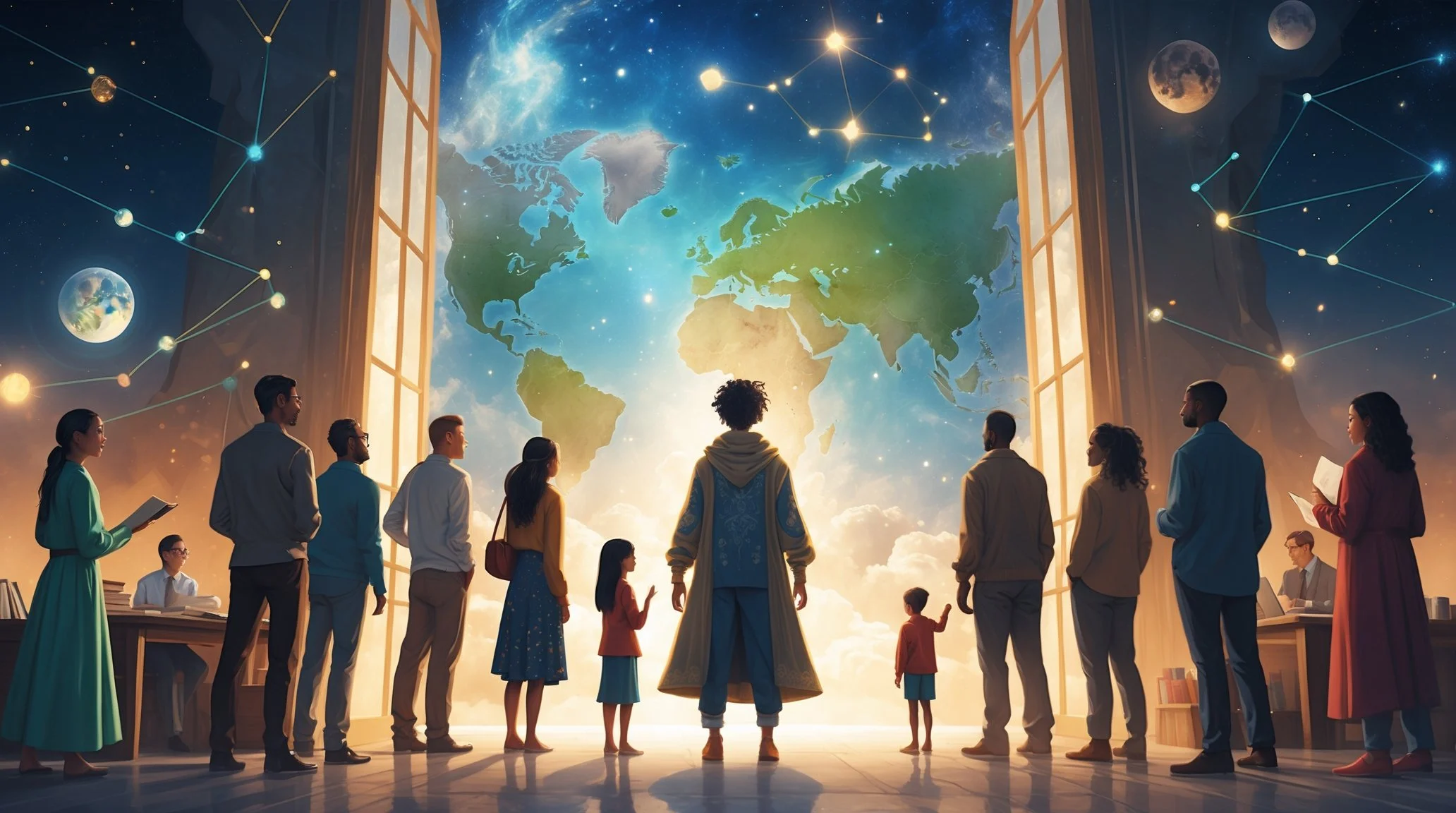
You stand at a doorway, staring out at an uncharted land - the blank page before creation. Beyond the threshold lies adventure, invention, and a thousand “what ifs” waiting to be imagined into being. Each note you play, every word you write, each stroke of the proverbial brush is a venture into the wilderness of creation - transforming imagination from private dreamscape into shared reality.
This is the call to adventure.
The question is: will you answer it?
Before you charge heroically (or tumble enthusiastically) into your next creative quest, let’s consider a small but rather inconveniently profound question:
What came first - imagination, language, or toolmaking?
Together, these three ancient powers led a fangless, clawless ape from climbing trees to building cities, composing symphonies, and arguing with strangers on the internet. They are humanity’s original superpowers, and every creative act you perform today is an echo of that first spark.
Imagination: The Spark That Made Us Human
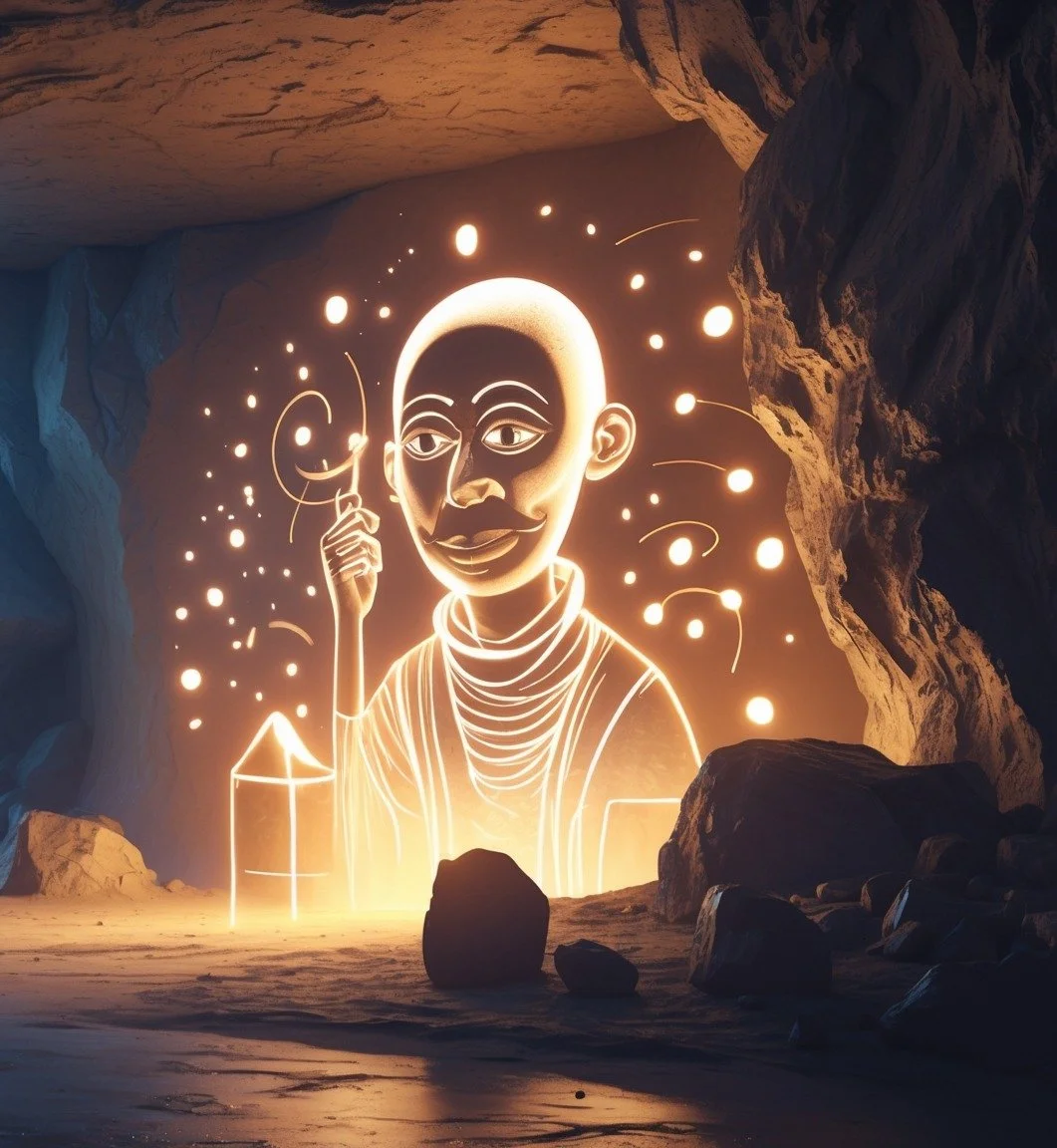
Long before we carved tools or told stories, there was imagination - that shimmering ember of “what if?” that flickered to life in the prehistoric brain. Contrary to popular myth, imagination didn’t evolve for idle daydreaming. It was a survival mechanism.
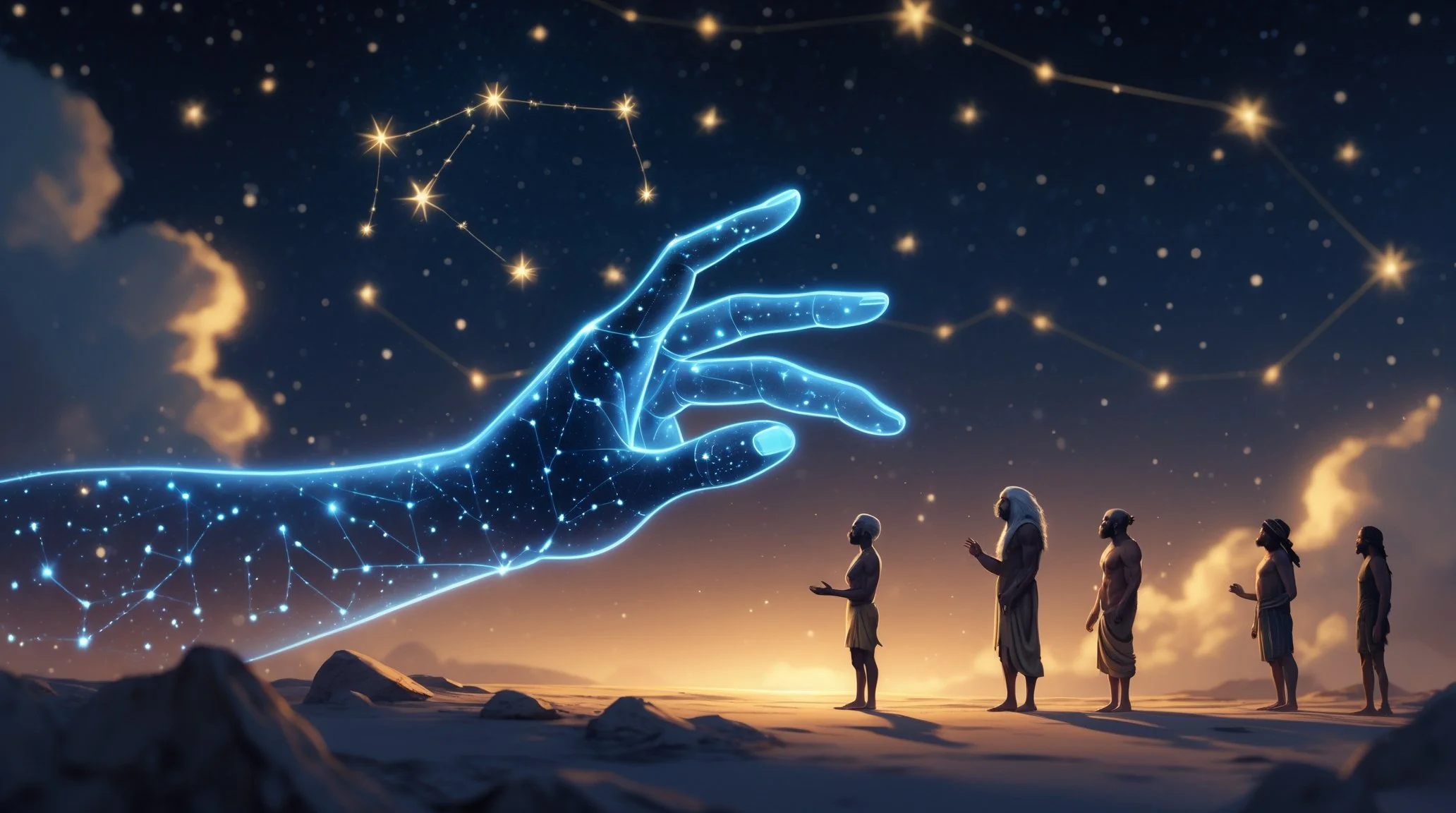
The first humans to picture a lion lurking behind the grass before it pounced had a distinct evolutionary advantage over those who simply admired the view. Imagination allowed us to see what wasn’t there yet: to plan a hunt, design a shelter, foresee danger, or dream up gods and constellations to explain the night.
Psychologists call this ability mental time travel - the skill to step into tomorrow before it arrives. It’s what let us stare at a rock and see a tool, at a cave wall and see a canvas, at a problem and see a possibility.
So no, imagination isn’t escapism. It’s humanity’s most practical technology - the original design software that powers every act of creation, innovation, and art.
And every time you create, teach, or build something from nothing, you’re wielding the same spark that made us human in the first place.
Language: Making the Invisible Visible
If imagination is the spark, then language is the breath that fanned it into flame.
The earliest humans began, as many great relationships do, with grooming. A little touch, a little cooing - primitive affection and community-building. But once tribes grew too big to spend all day picking bugs off each other, we invented something more efficient: vocal grooming - gossip, small talk, storytelling.
And just like that, imagination went viral.
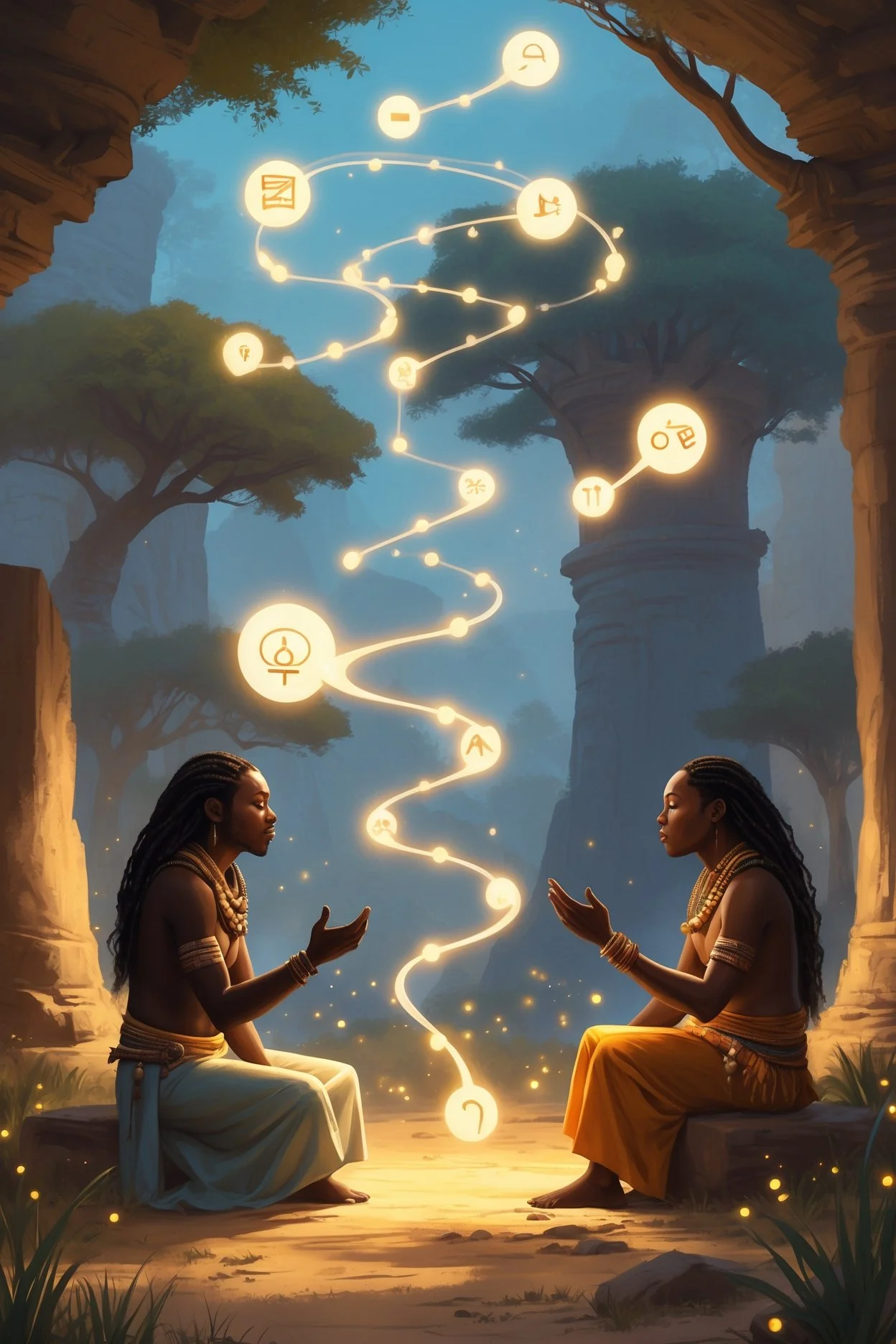
Language became the bridge between our private inner worlds and the collective imagination of the tribe. It was how we turned thought into sound, vision into culture, and solitude into society.
Through language, our ancestors didn’t just share facts - they shared feelings, fears, and fables. A story told around the fire could travel across generations, turning survival lessons into mythology and memory into meaning.
When we began turning instructions into songs and survival into story, something miraculous happened: people actually remembered things. (Neuroscience later confirmed that we remember stories up to 22 times better than plain facts - but our ancestors figured that out millennia before peer review existed.)
Storytelling was our first form of education - a way to rehearse life before living it. Through myth, metaphor, and shared imagination, we practiced bravery, empathy, and innovation without leaving the safety of the firelight.
Language didn’t just let us talk about the world - it let us create it.
Toolmaking: Shaping the World Through Creativity
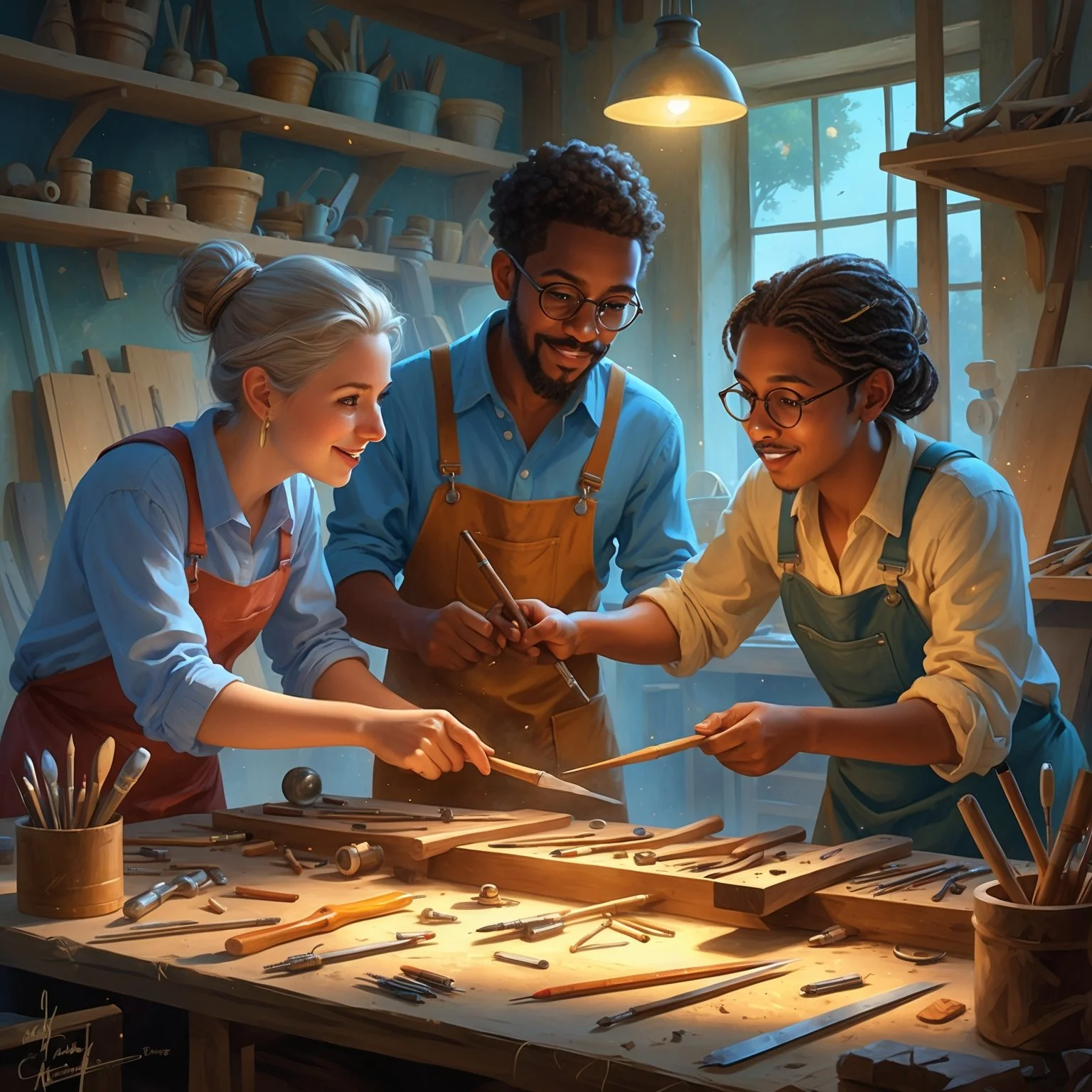
And then came the hands - those wonderfully clumsy instruments of divine mischief.
If imagination was the spark and language the fire, tools were the lightning rod that grounded our visions in reality.
Toolmaking was our first act of engineering, art, and storytelling combined. Each shaped stone carried an idea - proof that imagination could be made visible, touchable, and useful. Every hammer, brush, and stylus since has been a descendant of that first spark of creative audacity.
Today, our tools are digital rather than flint - but the principle hasn’t changed. We still dream, name, and build. We still turn ideas into artefacts that outlive us. Whether you’re crafting a business, a painting, or a poem, you’re continuing a 70,000-year-old tradition of turning vision into form.
The Modern Creator: A Descendant of Magicians
So, what does of all this mean?
Well, on the one hand, it tells us that imagination is as much a part of the human evolutionary story as language and tool making are. On the other, it hints at the fact that every single one of us is not only descended from creatives, but that we have this very superpower ourselves.
We are all part of an ancient tradition of imaginative engineers - dreamsmiths who looked at chaos and thought, “I can work with this.”
Imagination lets you see it.
Language lets you share it.
Creation lets you build it.
Together, they are the holy trinity of human creativity - the reason we have art, architecture, and the audacity to design worlds.
Every time you tell a story, teach an idea, or build a business, you are wielding the superpowers that made our species unstoppable.
So next time you sit down to create - whether with a pen, a brush, a camera, or a keyboard - remember:
You’re not just making art.
You’re doing what humans were born to do - turn imagination into reality.
Welcome, creator.
Your adventure has only just begun.